
Last updated: July 2026
HeyGen has grown into one of the fastest-rising names in AI avatar video. G2 named it the #1 Fastest Growing Product of 2026, and over 100,000 businesses now use the platform. This HeyGen review breaks down what the platform actually does, unpacks the credit system hiding behind its “unlimited” plan language, and gives an honest read on where HeyGen earns its reputation.
What Is HeyGen?
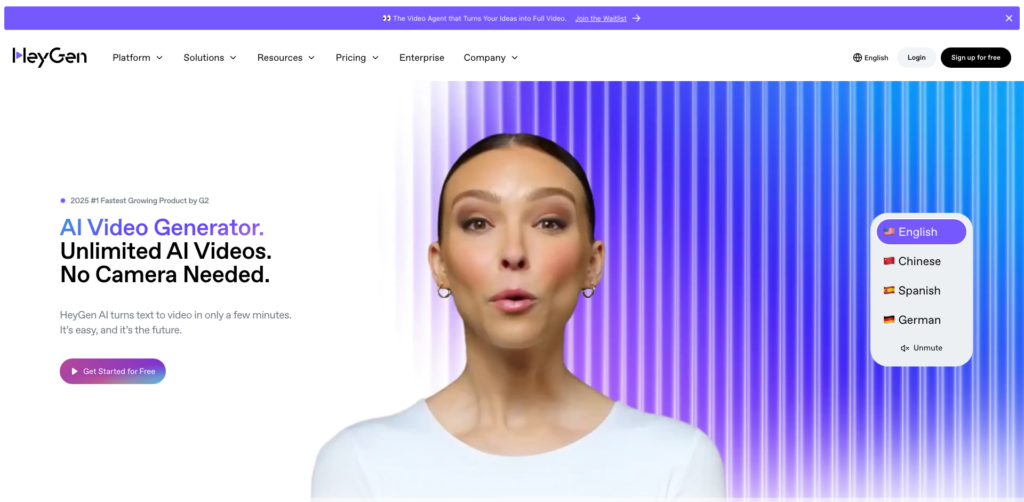
HeyGen is an AI video generation platform. It turns a written script into a finished video featuring a realistic digital avatar, complete with lip-sync and translation into 175+ languages. Like Synthesia, its core workflow is presenter-led video without a camera crew. However, HeyGen has pushed further into faster iteration, lower avatar-creation barriers, and real-time conversational avatars.
Well-known customers including Zoom, SAP, and Reuters reflect real enterprise traction. On the review side, G2 data shows HeyGen holding a 4.8/5 rating across more than 1,000 reviews, with its avatar-quality metric scoring 9.2/10 — consistently cited as HeyGen’s strongest element. This combination of enterprise adoption and strong review scores explains much of the buzz around HeyGen throughout 2026.
HeyGen’s Credit System: The Detail That Determines Your Real Cost
Before looking at plan pricing, it helps to understand HeyGen’s credit system directly. HeyGen prices video generation using a shared currency called Premium Credits, where different avatar quality tiers consume credits at very different rates.
The older Avatar III model costs roughly 3 credits per minute and feels effectively unlimited on paid plans. The newer, more photorealistic Avatar IV model costs around 20 credits per minute — nearly 7x more expensive. This distinction matters enormously in practice. The Creator plan’s 200 monthly credits sound generous until you realize that’s only about 10 minutes of Avatar IV video per month, the avatar quality most professionals actually want to use.
HeyGen Pricing: Every Plan Explained
Here’s exactly what each current HeyGen plan includes.
| HeyGen Plan | Price | Monthly credits | Key features |
| Free | $0/month | 3 Avatar IV videos | Watermarked, 720p export |
| Creator | $29/month ($24/month billed annually) | 200 credits (~10 min Avatar IV) | “Unlimited” Avatar III, 1080p, 175+ languages |
| Pro | $99/month | 2,000 credits (individual) | More capacity than Business per user |
| Business | $149/month + $20/seat | 1,000 credits (shared) | 4K rendering, custom avatars, SSO |
| Enterprise | Custom | Custom | Dedicated support, advanced security |
A genuinely useful detail buried in this structure: Pro actually provides more individual capacity than Business, despite costing $50 less per month. Pro’s 2,000 monthly credits belong entirely to one user, while Business’s 1,000 credits are shared across the whole workspace. As a result, the rule of thumb is simple — choose Pro if you work alone; choose Business only with two or more team members.
Several billing details matter before subscribing. First, HeyGen’s API is a completely separate purchase from any web plan, priced from $1.00/minute up to $5.00/minute. Second, only Business users can buy top-up credits; Creator and Pro users who run out mid-cycle must upgrade instead. Third, unused credits reset monthly and don’t carry over.
HeyGen Features: What You Actually Get
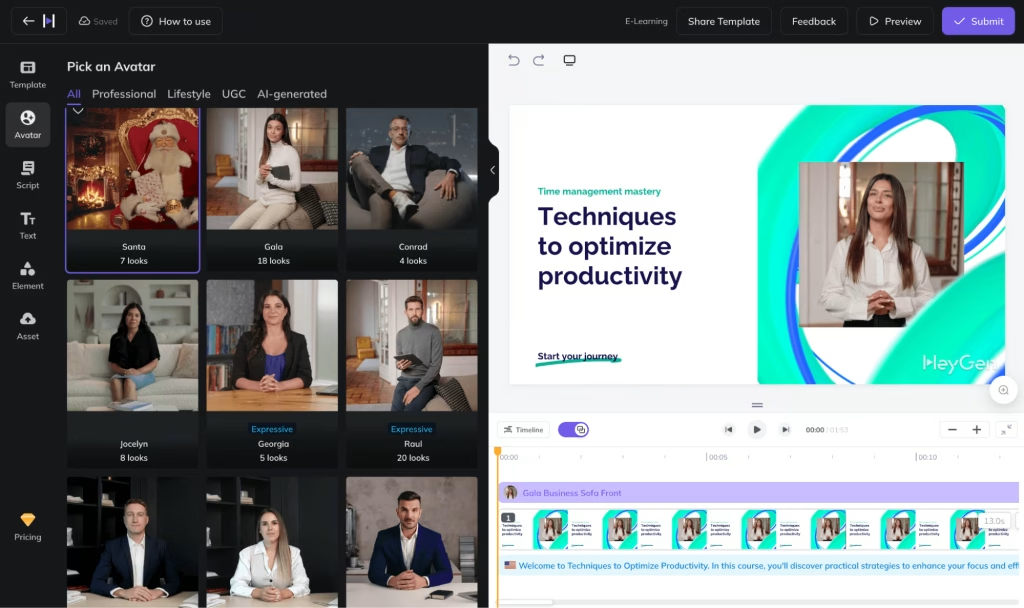
HeyGen’s feature set moves quickly, adding new capabilities throughout the year.
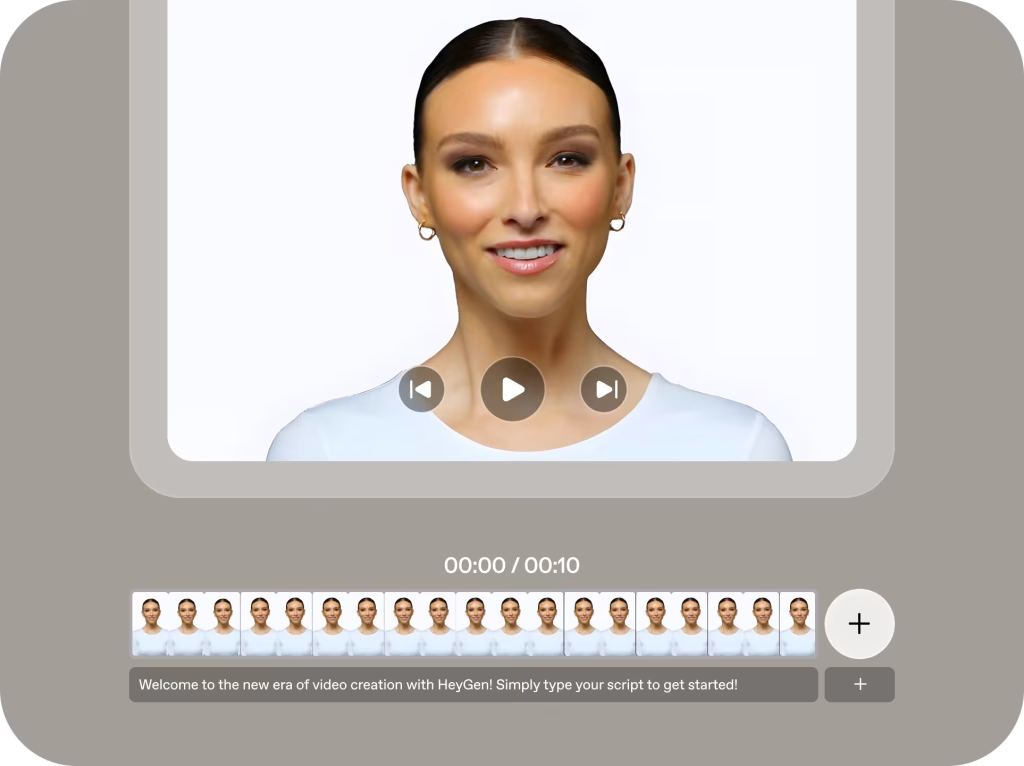
Fast avatar generation. Writing a script and generating a finished video typically takes minutes, compressing production timelines that once took weeks.
Digital Twin creation. HeyGen builds a custom avatar from as little as 2 minutes of recorded footage, a notably lower barrier than some competitors.
Real-time conversational avatars. A newer capability lets HeyGen avatars hold live, interactive conversations for customer support or coaching.
Broad translation support. With 175+ languages, HeyGen’s translation coverage is among the widest in the category.
Unlimited voice cloning. Included from Creator upward, letting users generate consistent narration without additional per-use costs.
HeyGen Strengths
Reviewers consistently highlight the same advantages.
Best-in-class avatar quality. G2’s dedicated metric scoring HeyGen at 9.2/10 reflects broad consensus that this is the platform’s standout strength.
Genuinely fast production. Reviewers describe HeyGen as removing the need for camera crews and costly traditional setups entirely.
Lower barrier for custom avatars. Building a Digital Twin from 2 minutes of footage is more accessible than longer competitor requirements.
Strong enterprise traction. Customers like Zoom and SAP, plus G2’s growth recognition, reflect real momentum.
HeyGen Weaknesses
A few drawbacks deserve honest attention before you subscribe.
“Unlimited” Creator is misleading. The advertised unlimited videos only apply to the older Avatar III model. Photorealistic Avatar IV avatars are capped at roughly 10 minutes per month.
A significant review gap. While G2 shows 4.8/5, Trustpilot tells a different story, with a 2.4/5 rating tied largely to pricing and billing complaints.
Costs add up quickly. Extra Business seats, limited top-up availability, and a separate paid API all push real team cost above the sticker price.
Looser consent requirements. Some researchers note HeyGen’s avatar-creation consent verification is less strict than Synthesia’s, raising legitimate deepfake concerns worth investigating before deploying at scale.
HeyGen vs. Synthesia
The most natural comparison is Synthesia, and the two platforms split along different priorities. HeyGen tends to win on avatar realism and iteration speed, plus a lower barrier for building a custom avatar. Synthesia, by contrast, holds an edge in enterprise compliance features like SCORM export, and stricter consent verification for building avatars of real people.
If your priority is the most photorealistic output and fastest iteration, HeyGen is the stronger pick. If your priority is corporate training deployed through a formal learning system with strict compliance standards, Synthesia remains more mature for that specific use case.
Who Is HeyGen Actually For?
Marketing teams producing localized videos benefit from HeyGen’s translation support and fast iteration.
Sales teams get real value from personalized outreach videos, replacing manually recorded individual messages.
Individual creators are often better served by Pro rather than Business, since Pro’s credits belong to one user entirely. Freelancers producing content for multiple clients frequently find Pro’s 2,000 individual credits more predictable than sharing a smaller pool across a workspace.
Developers need to budget for HeyGen’s API separately, since it isn’t included with any web subscription.
Frequently Asked Questions About HeyGen
Is HeyGen free to use? Yes. HeyGen’s free plan includes 3 Avatar IV videos monthly, though output is watermarked and limited to 720p.
Why does HeyGen say “unlimited” if there’s a credit limit? “Unlimited” applies specifically to the older Avatar III model. Photorealistic Avatar IV avatars are metered separately, capping Creator at roughly 10 minutes monthly.
Should I choose HeyGen Pro or Business? Choose Pro if you work alone, since its 2,000 credits belong to one user. Choose Business only with two or more team members needing collaboration tools.
Does a HeyGen subscription include API access? No. HeyGen’s API is billed separately, from $1.00 to $5.00 per minute depending on quality tier.
Is HeyGen better than Synthesia? HeyGen generally leads on avatar realism and speed, while Synthesia holds an edge in compliance features and consent verification.
Getting the Most Out of HeyGen
A few habits make HeyGen meaningfully more useful. First, map out your expected Avatar IV usage before choosing a plan, since the credit cost difference between Avatar III and IV is dramatic. Second, choose Pro over Business if you’re a solo creator, since shared credits stretch further per person under an individual allocation. Third, budget for the API separately if you’re building any automated pipeline, since no web plan includes it. Finally, investigate current consent-verification policies directly if you plan to create an avatar of another real person, particularly for any regulated or public-facing use case. Taking these steps upfront avoids the most common surprises reported by new HeyGen subscribers.
HeyGen for Marketing Teams: A Closer Look
Marketing teams deserve special attention, since HeyGen’s translation and iteration speed target them directly. A single script can become a dozen localized videos through HeyGen’s 175+ language support, without re-shooting anything or hiring voice actors for each market. As a result, a small marketing team can produce region-specific campaigns at a pace that would be impossible with traditional video production.
However, this speed advantage comes with a real budgeting caveat. Localized campaigns using Avatar IV avatars burn through credits quickly, since each language variant counts as a separate generation. A campaign targeting ten markets, for example, could consume 200 credits in a single afternoon if using photorealistic avatars throughout. Marketing teams planning multi-language campaigns should calculate expected credit usage before committing to a plan, rather than discovering the ceiling mid-campaign.
In practice, this means teams doing occasional localized content often fit comfortably on Creator, while teams running frequent, large-scale multi-language campaigns typically need Pro or Business to avoid hitting credit limits during active campaign periods.
HeyGen Alternatives Worth Knowing
HeyGen isn’t the only serious option, and it helps to know where the alternatives stand. Synthesia, covered above, remains the closest direct competitor on enterprise compliance and consent verification. Beyond that, Colossyan targets corporate training specifically, with a narrower focus than HeyGen’s broader marketing and sales use cases. D-ID offers a lighter-weight, more affordable entry point for simple avatar videos, though with less avatar realism than HeyGen’s Avatar IV model.
For most users, the decision comes down to priorities. HeyGen wins on avatar realism and iteration speed, backed by genuine innovation like real-time conversational avatars. A narrower or cheaper tool might edge ahead on one specific need, like Synthesia’s LMS compliance or D-ID’s lower price point, but few competitors match HeyGen’s combination of photorealistic output and fast-moving feature development.
Our Final Verdict on HeyGen
Bringing this HeyGen review together, here’s how it scores across the categories that matter most:
| Category | Score (out of 5) | Why |
| Avatar & video quality | 4.8 | Consistently the platform’s standout strength |
| Pricing transparency | 2.5 | “Unlimited” language is genuinely misleading |
| Feature depth | 4.3 | Digital Twin and real-time avatars show real innovation |
| Ease of use | 4.5 | Fast script-to-video turnaround |
| Value for money | 3.3 | Strong at the top end, weaker on predictable cost |
| Overall | 3.9/5 | Innovative and fast-moving, best for buyers who read the credit system carefully |
Bottom line: HeyGen earns its fast-growth reputation on avatar quality alone, but the gap between marketing language and metered reality is significant. For photorealistic avatars and rapid turnaround, HeyGen delivers; for formal compliance needs, Synthesia remains the more mature comparison.
_________________________________________________________________________________________________________
Transparency note: This HeyGen review draws on the platform’s official pricing page, verified G2, Capterra, and Trustpilot review data, and independent 2026 pricing analyses, rather than first-hand, long-term production use across every paid tier. Pricing and credit rates change frequently — always confirm current details on HeyGen’s official pricing page before subscribing.